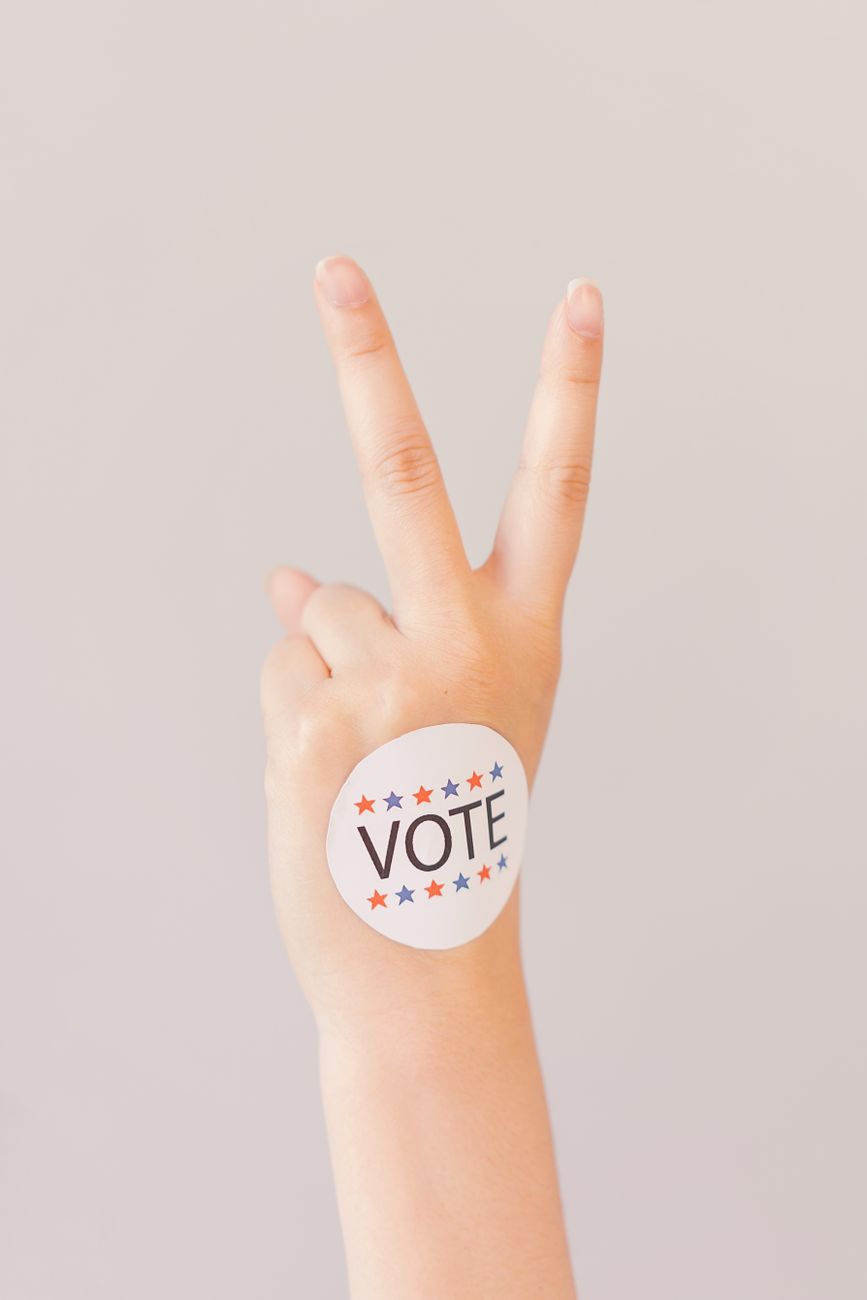
Here’s your friendly neighborhood social worker reminder: Check your voter registration.
Even if you’re pretty sure you’re registered. Even if you’ve voted before. Even if you haven’t moved. Even if you’re currently thinking: Murphy, I know. Great. Check anyway.
It takes a few minutes, and finding out there’s a problem before Election Day is considerably more useful than discovering it while standing at a polling place. You can check your voter registration here:
TurboVote Voter Registration Check:
https://voter.turbovote.org/check-your-registration/voter-info?ref=naswtn&orgID=4e52ddf2-bd38-4409-bac3-a2adb5c95602&utm_medium=email
Why Is a Therapist Talking About Voting?
Because mental health doesn’t exist in a vacuum.
As a social worker, one of the frameworks I come back to constantly is person-in-environment. We cannot understand someone’s mental health while pretending the world around them doesn’t matter.
Housing matters.
Healthcare matters.
Employment protections matter.
Education matters.
Disability services matter.
Reproductive healthcare matters.
Access to mental healthcare matters.
Discrimination matters.
Community safety matters.
Economic stability matters.
Whether people are legally protected — or legally vulnerable — matters.
And elected officials at the local, state, and federal levels make decisions about those things. Mental health is personal. But the conditions affecting our mental health are often political.
Voting Is Also a Mental Health Issue
This doesn’t mean voting is a coping skill. I’m not going to assign: PLEASE skills, deep breathing, drink some water, vote. But civic participation is increasingly recognized as connected to health and well-being.
Public policy determines how communities fund and structure mental health services, crisis response, insurance coverage, housing programs, schools, social services, disability supports, and many of the other systems people rely on.
In 2026, the National Alliance on Mental Illness formally described civic participation — including voting — as a social determinant of health, noting that voting gives people an opportunity to influence decisions affecting their communities, healthcare, and well-being. That connection is especially important when we talk about marginalized communities.
Not Everyone Experiences Policy as an Abstract Debate
For some people, politics can feel distant. An election happens. Someone wins. Someone loses. Life mostly continues. For other people, the outcome of an election can affect very concrete questions:
Can I access healthcare?
Will my family be legally recognized?
Will my child be safe at school?
Can I afford my medication?
Will accommodations remain available to me?
Am I protected from discrimination?
What services exist in my community?
Will my identity be protected—or legislated?
That is particularly relevant for communities that have historically had less political power, including LGBTQ+ people, racial and ethnic minority communities, disabled people, people living in poverty, and others whose lives may be disproportionately affected by public policy.
And there’s another piece of this that matters: Those communities have also historically faced — and in many cases continue to face — greater barriers to voting.
Voting Access Is Not Equal
It’s easy to say: “Everyone should just vote.”
Reality is more complicated. People may face barriers involving: Transportation. Work schedules. Childcare. Disability access. Housing instability. Identification requirements. Registration deadlines. Language access. Transportation to polling locations. Health conditions. Or simply understanding a voting system whose rules vary considerably depending on where you live.
Research on voter registration and healthcare has found that people who are unregistered are disproportionately represented among lower-income and racial and ethnic minority populations. That’s why voter access matters alongside voter participation. We can’t talk about the importance of voting while ignoring the barriers that make voting harder for some people than others.
Your Vote Isn’t the Only Way to Create Change
I want to say this too. Voting matters. Voting is not the entirety of civic engagement. Community organizing matters. Advocacy matters. Contacting legislators matters. Mutual aid matters. Protesting matters. Serving on boards matters. Volunteering matters. Having difficult conversations matters. Supporting organizations doing meaningful work matters. Running for office matters. Helping someone understand how to register matters. And sometimes simply paying attention matters.
Voting is one tool. But it’s an important one.
You Don’t Have to Know Everything Before You Vote
Sometimes people avoid voting because they don’t feel informed enough.
You do not need a master’s degree in political science to participate in democracy. You can research the candidates. Read about ballot initiatives. Look at voting records. Learn about local races. Read multiple sources. Decide what issues matter most to you. And you can acknowledge that no candidate will perfectly represent every value you hold.
Democracy would be significantly easier if every ballot simply contained: Candidate Who Agrees With Me About Literally Everything.
Unfortunately, I checked. That’s not currently an option.
Why I’m Sharing This
Social work has never been only about helping individuals cope with difficult circumstances. It’s also about paying attention to the environments, institutions, policies, and systems creating those circumstances. The National Association of Social Workers’ Code of Ethics calls on social workers to facilitate informed public participation in shaping social policies and institutions. That’s part of why I’m sharing this.
I’m not here to tell you who to vote for. I am here to remind you that your voice deserves to be part of the process. Especially if you belong to a community whose voice has historically been ignored, minimized, excluded, or actively suppressed.
So before Election Day:
Check your registration.
Know where you’re voting.
Learn what’s on your ballot.
Make a plan.
And then—
Use your voice.
So, Check Your Voter Registration
You can check your voter registration information through TurboVote here:
Even if you’re certain you’re registered. Just check. Your therapist said so.
(Okay, technically your therapist cannot make you. Autonomy and everything. But you get the idea.)
