If you’re one of my clients, there is a decent chance I’ve already mentioned the Finch app to you.
Possibly more than once.
I am a little obsessed with it.
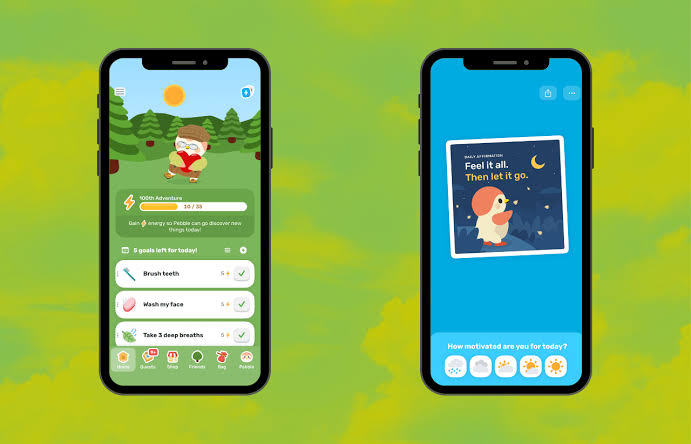
I have my own birb. His name is Pickle. I take care of Pickle, send him on adventures, complete my goals, and yes, I am emotionally invested in his tiny outfits.
This is probably a good place for an important disclaimer: Finch is not paying me to write this. This is not a sponsored post, and I don’t receive anything if you download or use the app.
I just genuinely like it.
And as both a therapist and a person who uses Finch myself, I find the psychology behind why an app about taking care of a tiny cartoon bird can actually help us take better care of ourselves pretty fascinating.
Because on the surface, Finch is adorable. Underneath that adorable surface? There are some legitimate psychological principles at work.
Behavioral activation.
Goal setting.
Positive reinforcement.
Self-monitoring.
Mindfulness.
Gamification.
And perhaps the surprisingly powerful realization that apparently I will complete a task I have been avoiding if doing so helps Pickle purchase a tiny hat.
So, yes. I would like to introduce you to a mental health tool that can involve completing important tasks such as:
- Taking your medication.
- Drinking water.
- Getting out of bed.
- Brushing your teeth.
- Going outside.
- And purchasing accessories for a cartoon bird.
Okay. That last part may not appear in most psychotherapy textbooks. But stay with me. If you haven’t heard of the Finch app, the basic idea is simple: you take care of a little virtual bird—called your birb—by taking care of yourself.
You create goals.
You complete them.
Your birb gains energy and goes on adventures.
You earn rewards.
You can decorate your birb’s home, buy tiny outfits, complete quests, reflect on your day, practice breathing exercises, and gradually watch this little digital creature grow.
Is Pickle going to cure my anxiety? No. He is a bird. We have discussed his scope of practice.
But Finch does something I find genuinely interesting as a therapist: It takes several psychological and behavioral principles that we know can be helpful and packages them in a format that can make doing them feel a little easier. And sometimes easier matters.
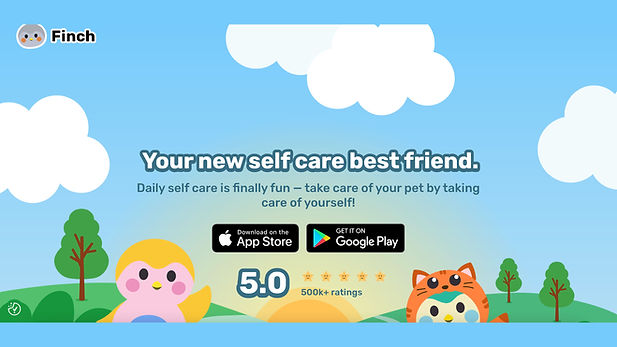
First: What Is Finch?
Finch is a self-care app built around a virtual pet. When you use the app, you can create daily goals for yourself.
These can be larger goals:
- Go to the gym.
- Finish my assignment.
- Call the doctor’s office.
Or very small ones:
- Get out of bed.
- Drink water.
- Brush my teeth.
- Step outside.
- Take three deep breaths.
Completing goals gives your birb energy and allows it to go on adventures. You can earn rewards and use them to customize your bird and its home.
The app also includes wellness activities such as reflections or journaling, breathing exercises, and focus timers.
At first glance, this can look like a cute productivity app. But from a therapist’s perspective, there are some interesting things happening underneath it.
Let’s talk about the psychology.
Behavioral Activation: Sometimes Action Comes Before Motivation
One of the strongest connections I see between Finch and an established psychological treatment is behavioral activation. Behavioral activation is an evidence-based treatment commonly used for depression.
One of its basic ideas is surprisingly simple: When we’re depressed, we often do less.
We withdraw.
Stay in bed.
Stop doing things we enjoy.
Avoid responsibilities.
See people less.
Move less.
And unfortunately, doing less can reduce our opportunities to experience pleasure, accomplishment, connection, mastery, and positive reinforcement.
Which can make depression worse.
Which makes us want to do even less.
And now we have a lovely little feedback loop.
Behavioral activation tries to interrupt that cycle by helping people gradually engage in meaningful or useful activities even when motivation hasn’t shown up yet.
This is important because depression often tells us: “I’ll do it when I feel better.”
Behavioral activation sometimes asks: “What if doing something small is part of how we begin feeling better?”
Research on behavioral activation is substantial. A 2026 comprehensive meta-analysis including 105 randomized trials found behavioral activation effective for adult depression, with benefits also found for self-guided behavioral activation approaches (Cuijpers et al., 2026).
And this is where our tiny bird enters the chat.
Your Birb Does Not Require You to Feel Motivated
Finch allows you to break your day into concrete behaviors.
Not: Be less depressed.
That’s not particularly actionable.
Instead:
- Open the blinds.
- Take medication.
- Eat breakfast.
- Walk outside for five minutes.
- Text someone.
- Shower.
Those are behaviors. And behaviors give us somewhere to start.
This can be particularly helpful on days when something that sounds ridiculously simple on a good day feels enormous on a difficult one.
If you’ve ever experienced depression, burnout, grief, executive dysfunction, or significant anxiety, you may know exactly what I mean.
Sometimes: “Take a shower.” feels like a 14-step infrastructure project.
Breaking life into small, observable actions can make getting started more manageable.
And Finch adds another element: Your bird benefits when you do the thing.
Apparently I may not be willing to drink water for myself, but if a small cartoon animal requires me to do it? Fine. Hydration it is.
Tiny Goals Are Still Goals
I also appreciate that Finch allows goals to be very small.
Because mental health advice sometimes dramatically overestimates people’s available capacity.
Someone is depressed and struggling to get out of bed, and we hand them a wellness plan involving:
Exercise!
Meal prep!
Meditation!
Socializing!
Journaling!
Eight hours of sleep!
Have you considered becoming a completely different person by Monday?
Sometimes the next useful step is much smaller.
Put your feet on the floor.
Then: Stand up.
Then maybe: Drink some water.
This fits nicely with behavioral approaches because we’re making the desired behavior specific and achievable. You can always build from there.
On a high-capacity day, your goal might be: Walk for 30 minutes.
On another day: Stand outside for two minutes.
Both can represent movement toward taking care of yourself.
The appropriate goal depends on where you are.
Finch Adds Reinforcement
Here’s another behavioral principle hiding underneath the adorable bird: Reinforcement.
Behaviors are influenced by what happens after we do them. One reason healthy habits can be difficult to establish is that many of their rewards are delayed.
You exercise today. The long-term health benefit comes later.
You save money today. The payoff may be months or years away.
You take medication consistently. The benefit may be gradual.
You complete one tiny task while depressed. Nobody throws you a parade.
Rude, honestly.
Finch creates a more immediate consequence.
Complete the goal. Your birb gets energy. You earn rewards. Something happens.
The app essentially says: Hey. You did the thing. That counts.
That little feedback loop can make otherwise mundane behaviors more engaging.
This Is Gamification
Using game-like features to encourage engagement in non-game activities is generally called gamification.
Points.
Rewards.
Progress.
Customization.
Challenges.
Levels.
Characters.
Those types of features are increasingly used in health and mental health apps.
And there’s a logical reason for that: The best mental health tool in the world isn’t particularly helpful if you never use it. Engagement is a major challenge with mental health apps. People frequently download them with excellent intentions and then abandon them. You know. Like every meditation app currently living untouched on someone’s phone.
Gamification tries to make returning to the activity more rewarding.
Research suggests gamification may support engagement and behavior change in health applications, although the evidence is mixed and we should not assume that adding rewards or a cute character automatically makes an intervention more clinically effective (Cheng et al., 2019; Six et al., 2021). That’s an important distinction. Finch being engaging doesn’t automatically mean Finch itself is a mental health treatment. But engagement can make psychologically useful behaviors easier to practice consistently. And consistency matters.
There’s Also Self-Monitoring
Finch encourages users to check in with themselves and offers reflection and journaling activities. That introduces another useful behavioral principle: self-monitoring.
Sometimes we move through our days without really noticing patterns.
What makes my mood worse?
When do I have more energy?
What activities help?
What am I avoiding?
What keeps showing up emotionally?
What happens when I actually leave the house?
What happens when I isolate?
In therapy, tracking behavior, mood, triggers, thoughts, urges, or activities can help us identify patterns that are difficult to see from memory alone. Because human memory is not exactly an unbiased data collection system.
If you’ve had a terrible evening, your brain may confidently announce: “This entire week has been terrible.”
Has it?
Maybe.
But let’s check the records before we fire the entire week.
Reflection can create a little distance between: having an experience and observing the experience.
That can be useful across multiple therapeutic approaches.
The App Can Also Create a Pause
Finch includes breathing exercises and other wellness activities.
Breathing exercises are not magic. They will not solve your marriage, pay your electric bill, resolve childhood trauma, or make your coworker stop replying-all to company emails. But intentional breathing can be one tool for influencing physiological arousal and creating a pause before responding. And that pause can matter.
Sometimes the goal isn’t: “Make this emotion disappear.”
It’s: “Give me enough room to decide what I want to do next.”
That fits well with emotion-regulation and mindfulness-based approaches.
Notice what’s happening.
Pause.
Create some space.
Choose what comes next.
It Can Externalize Self-Care
This may be one of the most interesting parts of Finch psychologically, even though it isn’t necessarily a formal therapeutic mechanism.
Some people find it much easier to care for others than to care for themselves.
You might skip lunch. But would you forget to feed your dog?
You might tell yourself you don’t deserve rest. But you’d tell your best friend to go to bed.
You might ignore your own needs until a tiny digital bird essentially says: Hello. Perhaps we could consume water today.
Finch externalizes self-care.
Instead of: “I need to take care of myself.” the experience becomes: “I’m taking care of my birb by doing something that also takes care of me.”
For people who struggle with self-compassion, motivation, or recognizing their own needs as legitimate, that extra layer can make self-care feel more approachable.
Over time, ideally, the lesson becomes: The bird deserves care. And perhaps: So do I.
Finch Can Make Invisible Progress Visible
Mental health progress is often frustratingly difficult to see.
You don’t receive an achievement badge for:
- Getting out of bed during a depressive episode.
- Not asking for reassurance.
- Taking medication consistently.
- Going to therapy.
- Eating when you don’t feel like eating.
- Leaving the house while anxious.
- Setting a boundary.
- Taking a shower after three difficult days.
Finch creates visible evidence that you did something.
You checked it off.
Your bird progressed.
You earned something.
Your streak continued.
There’s now a tiny record saying: This happened.
That may sound insignificant. But when your brain tends to discount progress, external evidence can be useful.
And Honestly? Sometimes Cute Helps
This isn’t particularly complicated psychological theory. Sometimes difficult things become easier when we make them a little more pleasant.
Mental health work can be heavy.
Therapy can be hard.
Building routines when you’re depressed can be hard.
Managing anxiety can be exhausting.
Taking care of yourself when you don’t particularly feel like taking care of yourself can be incredibly difficult.
If turning some of that into: “Let’s send my bird on an adventure.” makes you more willing to participate? I am not going to argue with the bird.
We do not get extra points for making mental health work miserable.
But Finch Is Not Therapy
Here’s where I put on my therapist hat. Which, unfortunately, is significantly less exciting than your birb’s hat.
Finch should not be treated as a replacement for professional mental health treatment when treatment is needed.
An app cannot independently assess what’s happening clinically.
It cannot provide individualized psychotherapy.
It cannot diagnose a mental health condition.
It cannot replace a therapeutic relationship.
And although several Finch features resemble techniques used in evidence-based interventions, that does not mean we can assume the Finch app itself has the same evidence base as behavioral activation, CBT, DBT, mindfulness-based treatments, or other established interventions.
That’s a really important distinction.
We’re looking at the psychological principles embedded in the tool. Not declaring the tool equivalent to therapy.
It Also Won’t Work for Everyone
Some people love streaks. Other people see a streak and immediately feel like they’ve been assigned homework by their phone.
Some people love rewards. Some don’t care.
Some people become motivated by checking boxes. Others become perfectionistic about them.
And some people will forget the app exists approximately four days after downloading it.
That’s okay.
Mental health tools aren’t universally helpful.
If Finch starts creating pressure rather than support, that’s useful information.
You might simplify your goals.
Turn off unnecessary notifications.
Stop caring about maintaining a perfect streak.
Or decide the app isn’t for you.
A self-care app becoming another thing you use to criticize yourself would somewhat defeat the purpose.
How I Would Use Finch Alongside Therapy
This is where I think the app can become particularly useful.
Instead of filling Finch with only chores, I would use goals intentionally.
For behavioral activation:
- Go outside for five minutes.
- Text one person.
- Do one thing I usually enjoy.
- Get dressed.
For anxiety or exposure work:
- Do the thing while anxious.
- Leave one reassurance question unanswered.
- Allow one small uncertainty.
For self-care:
- Eat lunch.
- Take medication.
- Drink water.
- Start getting ready for bed.
For mindfulness:
- Notice five things around me.
- Take three slow breaths.
- Name what I’m feeling.
For self-compassion: Say one thing to myself that I would say to a friend.
For boundaries: Pause before automatically saying yes.
For perfectionism: Leave one low-stakes thing good enough.
Now your goals aren’t random productivity tasks. They’re connected to what you’re actually working on. That’s where an app can become a useful support for therapy rather than a substitute for it.
The Smallest Goal Still Counts
One thing I hope people take away from tools like Finch is that taking care of yourself doesn’t have to begin with an enormous transformation.
You don’t need a perfect morning routine.
You don’t need twelve new habits.
You don’t need to feel motivated.
You don’t need to fix your entire life this week.
Sometimes the next step really is:
Get out of bed.
Open the blinds.
Take the medication.
Drink the water.
Answer the email.
Walk outside.
Text someone back.
Take three breaths.
Do one small thing that makes tomorrow slightly easier.
Behavioral activation reminds us that we don’t always have to wait for motivation before we act.
Sometimes action comes first. Motivation may follow. And if a tiny cartoon bird wearing a ridiculous hat helps you take that first step? Fine.
We ride at dawn, birb.
References
Cheng, V. W. S., Davenport, T., Johnson, D., Vella, K., & Hickie, I. B. (2019). Gamification in apps and technologies for improving mental health and well-being: Systematic review. JMIR Mental Health, 6(6), e13717. https://doi.org/10.2196/13717
Cuijpers, P., et al. (2026). Behavioral activation for depression: A comprehensive systematic review and meta-analysis. Clinical Psychology Review. https://doi.org/10.1016/j.cpr.2026.102783
Cuijpers, P., van Straten, A., & Warmerdam, L. (2007). Behavioral activation treatments of depression: A meta-analysis. Clinical Psychology Review, 27(3), 318–326. https://doi.org/10.1016/j.cpr.2006.11.001
Ng, M. M., Firth, J., Minen, M., & Torous, J. (2019). User engagement in mental health apps: A review of measurement, reporting, and validity. Psychiatric Services, 70(7), 538–544. https://doi.org/10.1176/appi.ps.201800519
Six, S. G., Byrne, K. A., Tibbett, T. P., & Pericot-Valverde, I. (2021). Examining the effectiveness of gamification in mental health apps for depression: Systematic review and meta-analysis. JMIR Mental Health, 8(11), e32199. https://doi.org/10.2196/32199

Leave a comment