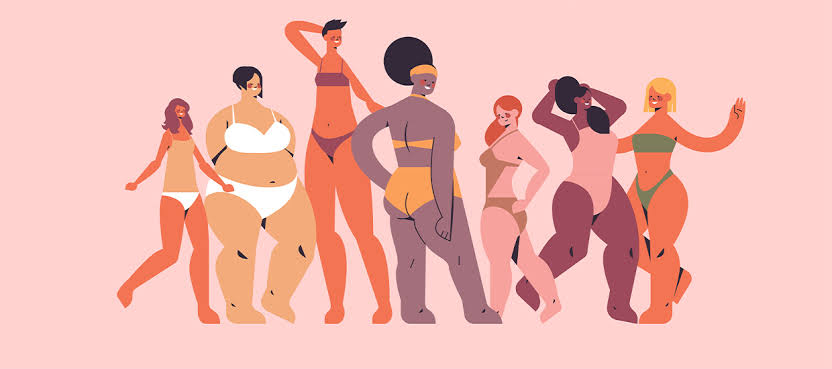
If you’ve spent years believing your body is something to fix, shrink, discipline, or apologize for, you’re not alone.
Most of us didn’t arrive at that belief on our own. We learned it. We learned it from magazine covers promising that “perfect beach body.” We learned it from family members who talked about calories over dinner. We learned it from doctors who blamed every symptom on weight. We learned it from social media, clothing stores, and an industry that profits when we believe we’re never quite enough.
It’s hard to feel at home in your body when you’ve spent your whole life being told it’s a problem to solve.
But what if your body was never the problem?
We Live in a Culture That Equates Thinness With Worth
From an early age, we’re taught that thinner bodies are healthier, more attractive, more disciplined, and somehow more deserving of love and respect. Those messages are everywhere. They’re so common that we often stop noticing them.
Someone loses weight and is immediately congratulated, even if the weight loss came from grief, illness, or chronic stress.
People apologize before eating dessert.
We compliment children for being “so skinny.”
We assume larger bodies are unhealthy without knowing anything about the person’s health, movement, genetics, or life.
These messages don’t just shape how we see other people. They shape how we see ourselves.
Body Image Doesn’t Exist in a Vacuum
When someone tells me they hate their body, I’m rarely interested in convincing them to love it by the end of the session.
I’m more interested in asking:
Who taught you that your body wasn’t enough?
Whose standards are you measuring yourself against?
Who benefits from you believing you’ll finally be worthy after changing your body?
Those aren’t rhetorical questions. Entire industries make money by convincing us that our bodies are projects instead of homes.
You Don’t Have to Earn Respect
One of the most painful beliefs many people carry is this:
“I’ll deserve kindness once I lose weight.”
“I’ll wear the swimsuit after I change my body.”
“I’ll start dating when I finally look the way I’m supposed to.”
But your body isn’t a prerequisite for living your life.
You don’t have to earn a seat at the table.
You don’t have to earn photos with your family.
You don’t have to earn rest.
You don’t have to earn joy.
You don’t have to earn respect.
Those things belong to you because you’re a human being – not because of your body size.
Body Positivity Isn’t the Same as Loving Your Body Every Day
Some people genuinely love their bodies. Others don’t. Both experiences are okay. For many people, the pressure to love their body feels like just another impossible standard.
You don’t have to wake up every morning thrilled about your appearance. You also don’t have to spend every day at war with yourself. There is a middle ground.
Some people call it body neutrality. Others call it body respect or body liberation. Whatever language resonates with you, the idea is similar: Your body deserves care regardless of how you feel about it today.
Your Body Is Not a Moral Issue
Somewhere along the way, many of us learned to assign moral value to bodies.
We describe foods as “good” or “bad”.
We call ourselves “bad” for eating dessert.
We assume discipline can be seen from the outside.
We praise people for taking up less space.
But bodies don’t have moral value.
A larger body isn’t a personal failure. A smaller body isn’t a moral achievement. Bodies simply exist. And every body deserves dignity.
What If You Stopped Fighting Your Body?
Imagine how much time, energy, and emotional space becomes available when you’re no longer spending every day trying to fix yourself.
What hobbies would you return to?
What clothes would you wear?
Would you go swimming?
Would you dance?
Would you let someone take your picture?
Would you stop waiting for a future version of yourself to start living?
Body acceptance isn’t giving up. It’s choosing not to let self-hatred run your life.
Caring for Your Body Doesn’t Require Hating It
One of the biggest misconceptions about body acceptance is that it means ignoring your health. It doesn’t.
You can nourish your body because it deserves nourishment.
You can move because movement helps you feel stronger, calmer, or more connected to yourself.
You can rest because your body needs rest.
You can seek medical care because your health matters.
None of those choices require shame.
Research consistently shows that shame is not a sustainable motivator for behavior change. In fact, self-compassion is associated with healthier coping, greater psychological well-being, and more consistent engagement in health-promoting behaviors.
You don’t have to dislike yourself into taking care of yourself.
A Different Question
Instead of asking: “How do I finally love my body?”
Try asking: “How can I make peace with living in it?”
Maybe that means buying clothes that fit the body you have today.
Maybe it means unfollowing accounts that leave you feeling ashamed.
Maybe it means noticing the voice of your inner critic and asking whose voice it really is.
Maybe it means allowing yourself to exist without constantly evaluating how much space you take up.
Healing your relationship with your body isn’t about becoming someone else.
It’s about coming home to yourself.
Final Thoughts
Your body has carried you through every ordinary day and every impossible one. It has adapted, protected you, healed, survived, and gotten you here. It was never meant to be your full-time job.
You don’t have to spend your life chasing a version of yourself that promises happiness just beyond the next diet, the next workout plan, or the next number on the scale. You deserve a life that is bigger than your body.
You deserve relationships, laughter, meaningful work, good food, rest, movement that feels joyful, and moments of connection – not after you change your body, but now.
Because your worth has never depended on your size. It never will.

Leave a comment