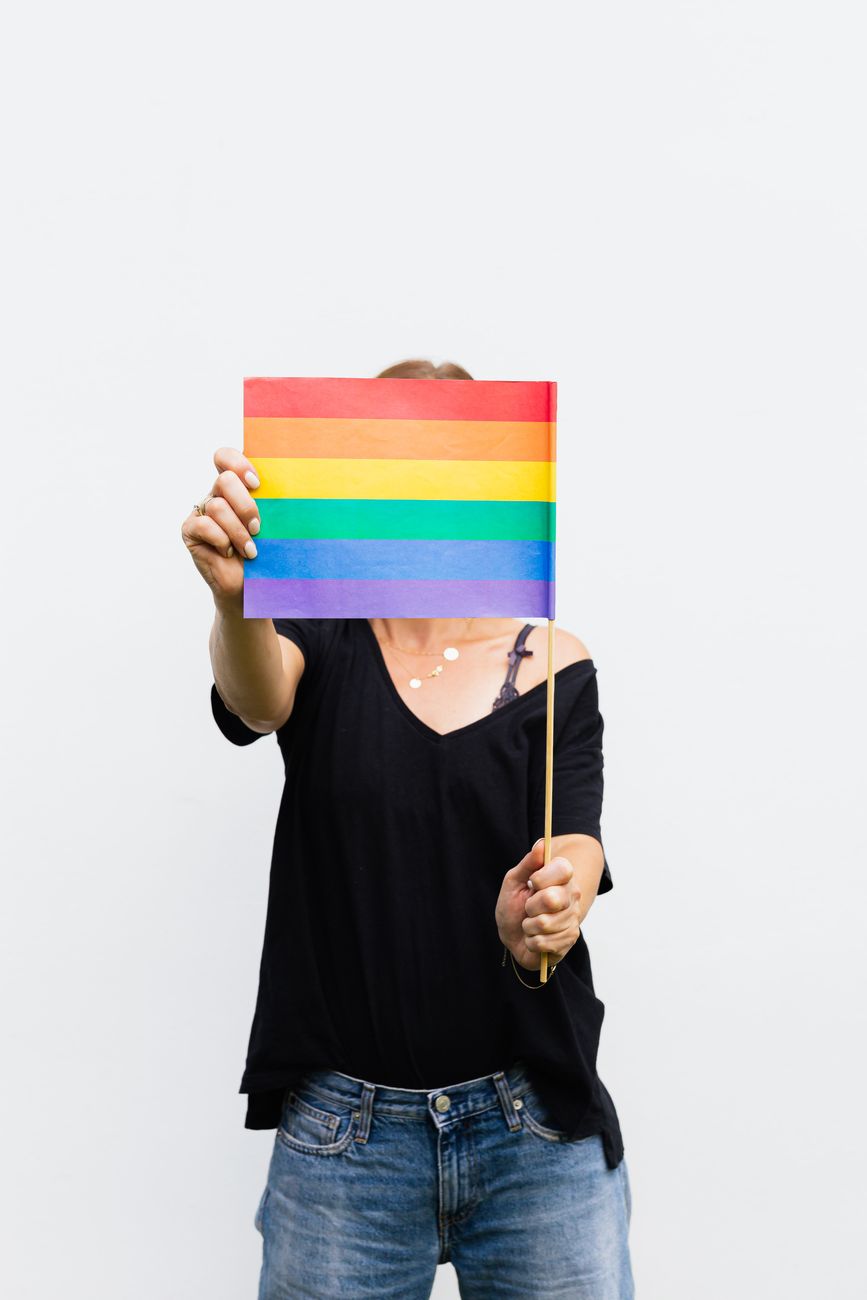
October is LGBTQ+ History Month – a time to honor the resilience, courage, and contributions of LGBTQ+ people throughout history. It is also an opportunity to reflect on a deeply personal part of many queer people’s journeys: the process of unlearning shame and reclaiming identity.
For many LGBTQ+ individuals, discovering who they are is not simply a process of self-exploration. It can also involve untangling years of messages about who they were “supposed” to be.
Messages from family, religion, culture, media, schools, and society can shape the way we see ourselves. Sometimes these messages are direct and painful. Other times, they are subtle: the absence of queer representation, assumptions about gender roles, jokes made at someone else’s expense, or the expectation that heterosexuality and being cisgender are the default.
When people grow up surrounded by messages that their identity is wrong, unacceptable, or something to hide, shame can become internalized.
But shame is not an inherent part of being LGBTQ+.
Shame is something that is l earned. And what is learned can be unlearned.
Understanding Internalized Shame
Shame is a painful emotional experience that tells us something is wrong with who we are. Unlike guilt, which focuses on behavior (“I did something wrong”), shame targets identity (“There is something wrong with me.”)
For LGBTQ+ individuals, shame may develop when external messages of rejection, stigma, or discrimination become internal beliefs. A person may begin to think:
- “Maybe there is something wrong with me.”
- “I need to hide this part of myself.”
- “I will only be accepted if I make myself smaller.”
- “My needs and identify are a burden.”
- “I have to earn love by being easy to accept.”
These beliefs do not appear out of nowhere. They often develop as understandable responses to environments where authenticity was not fully safe.
Mental health professionals describe this process as minority stress – the chronic stress experienced by members of stigmatized groups due to prejudice, discrimination, expectations of rejection, and the need to navigate unsafe environments. Research has consistently demonstrated that LGBTQ+ individuals experience elevated stress related to stigma and that these experiences can impact mental health outcomes. (Meyer, 2003).
Understanding this matters because it shifts the question from: “What’s wrong with me?” to: “What happened that taught me I needed to hide?”
The Difference Between Identity and Shame
One of the most important steps in healing is separating your identity from the messages you received about your identity.
Being LGBTQ+ is not the source of shame.
The shame often comes from:
- being taught that difference is dangerous
- experiencing rejection or invalidation
- having to hide important parts of yourself
- feeling pressure to perform an identity that was never yours
- living in environments where acceptance was conditional
A person who has spent years receiving messages that they are “too much,” “wrong,” or “different” may begin to believe those messages – even when they are untrue.
Healing involves recognizing: The voice of shame is not always your own voice.
Sometimes it is the echo of every person, institution, or system that taught you to question your worth.
Reclaiming Your Identity Is an Act of Healing
Reclaiming identity does not mean becoming someone new. It means returning to yourself.
For some people, this looks like coming out. For others, it may mean allowing themselves to explore their gender, sexuality, relationships, or expression more openly. For others, it may mean privately acknowledging and honoring parts of themselves they were taught to reject.
There is no single “right” way to be LGBTQ+. There is no timeline you have to follow.
There is no requirement that you be perfectly confident, completely healed, or free from fear before you deserve to embrace yourself. Identity development is often a lifelong process.
Mental health professionals have explore LGBTQ+ identity development as a process involving awareness, exploration, integration, and a growing sense of authenticity. While models of identity development are not meant to describe everyone’s experience, they highlight an important truth: identity is something we continue to understand and shape throughout our lives. (Cass, 1979; McCarn & Fassinger, 1996)
Healing the Parts of You That Learned to Hide
Many LGBTQ+ individuals develop protective strategies in response to unsafe environments. You may have learned to:
- stay quiet to avoid conflict
- minimize your needs
- hide relationships or emotions
- prioritize others’ comfort over your own
- become highly aware of how others perceive you
- disconnect from parts of yourself to feel accepted
These strategies may have helped you survive. They may have protected you when acceptance felt uncertain. Healing does not require criticizing the parts of yourself that adapted. Instead, healing invites curiosity:
“What was this part of me trying to protect me from?”
“What did I need then that I did not receive?”
“What would it look like to offer myself that now?”
Moving From Shame to Self-Compassion
Research on self-compassion suggests that treating ourselves with kindness and understanding during moments of suffering can support emotional well-being and resilience. (Neff, 2003)
For LGBTQ+ individuals healing from shame, self-compassion may sound like:
“I learned to hide because I was trying to stay safe.”
“My identity does not need permission to exist.”
“I am allowed to take up space.”
“I do not have to prove that I deserve acceptance.”
“I can honor the younger version of myself who needed protection.”
Self-compassion is not ignoring painful experiences. It is acknowledging what happened while refusing to continue the cycle of self-rejection.
Creating a Life Beyond Survival
A powerful part of LGBTQ+ healing is moving from survival into authenticity.
Survival asks: “How do I avoid rejection?”
Authenticity asks: “How do I create a life that feels like mine?”
This may involve:
- building relationships where you can be fully known
- finding LGBTQ+ community and chosen family
- setting boundaries with people who do not respect your identity
- exploring joy without guilt
- allowing yourself to experience pride, connection, and belonging
Queer history is filled with stories of resistance, creativity, love, and transformation. LGBTQ+ identified individuals have always created communities, challenged injustice, and imagined new possibilities – even when systems told them they could not.
Your existence is part of that history.
A Reflection for LGBTQ+ History Month
Consider taking some time to reflect:
- What messages did I receive about LGBTQ+ identities growing up?
- Which of those messages do I still carry?
- Who would I be if I no longer believed I had to earn acceptance?
- What parts of myself am I ready to welcome back?
- What does living authentically look like for me now?
Reclaiming identity is not about becoming someone society finally approves of. It is about recognizing that you were always worthy of love, belonging, and dignity. The work is not becoming acceptable. The work is coming home to yourself.
References
Cass, V. C. (1979). Homosexual identity formation: A theoretical model. Journal of Homosexuality, 4(3), 219–235. https://doi.org/10.1300/J082v04n03_01
McCarn, S. R., & Fassinger, R. E. (1996). Revisioning sexual minority identity formation: A new model of lesbian identity and its implications for counseling and research. The Counseling Psychologist, 24(3), 508–534. https://doi.org/10.1177/0011000096243011
Meyer, I. H. (2003). Prejudice, social stress, and mental health in lesbian, gay, and bisexual populations: Conceptual issues and research evidence. Psychological Bulletin, 129(5), 674–697. https://doi.org/10.1037/0033-2909.129.5.674
Neff, K. D. (2003). Self-compassion: An alternative conceptualization of a healthy attitude toward oneself. Self and Identity, 2(2), 85–101. https://doi.org/10.1080/15298860309032
Puckett, J. A., & Levitt, H. M. (2015). Internalized stigma within sexual and gender minorities: Change strategies and clinical implications. Journal of LGBT Issues in Counseling, 9(4), 329–349. https://doi.org/10.1080/15538605.2015.1112335

Leave a Reply