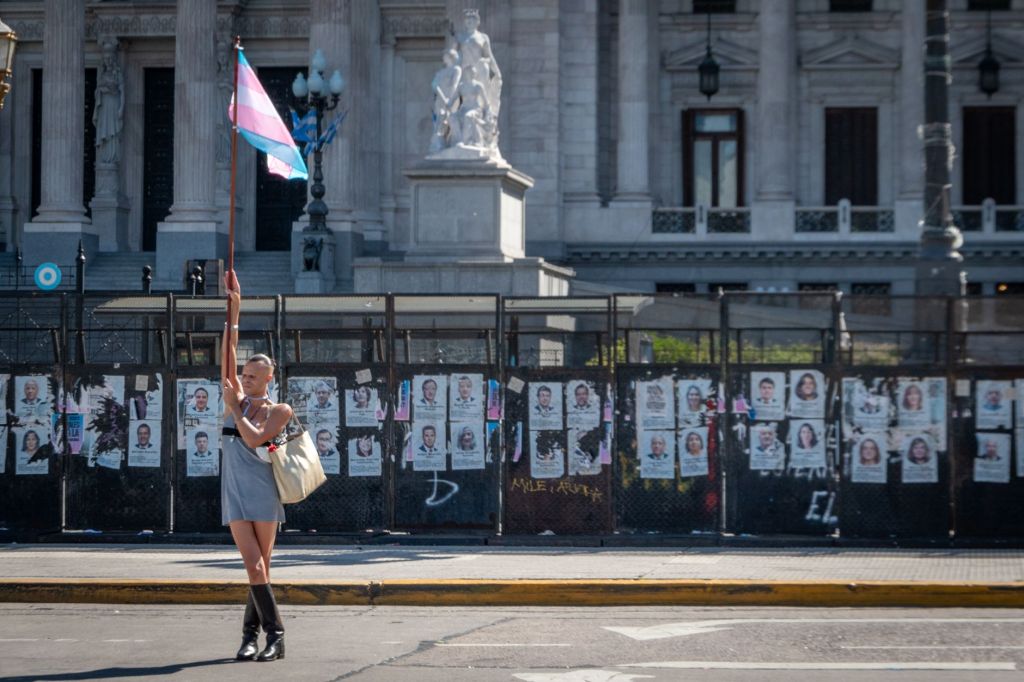
Every year on November 20, we observe Transgender Day of Remembrance (TDOR).
It is a day to honor transgender and gender-diverse people whose lives have been lost to anti-transgender violence.
There are names read aloud.
Candles lit.
Stories shared.
People remembered.
And behind every name is something that can easily disappear when we talk about statistics.
A person.
Someone who had favorite foods and inside jokes.
Someone who got tired and annoyed and excited about things.
Someone who had people they loved.
Someone who had plans.
Someone who deserved more birthdays.
More ordinary Tuesdays.
More opportunities to change their mind.
More terrible television.
More mornings waking up.
More time to become whoever they were becoming.
They should still be here.
Transgender Day of Remembrance Began With a Life
Transgender Day of Remembrance traces its beginnings to 1999, when transgender advocate Gwendolyn Ann Smith organized a vigil to honor Rita Hester, a Black transgender woman who was killed in Massachusetts in 1998. The observance grew into an annual day of remembrance for transgender people lost to violence.
More than two decades later, the need for that remembrance remains. Violence against transgender people does not affect all members of the community equally. In the United States, Black transgender women and other transgender women of color have been disproportionately represented among known victims of fatal anti-transgender violence. And even the numbers we have cannot tell the entire story. A person’s transgender identity may not be accurately reported after their death. They may be misgendered or referred to by a former name in official records or media coverage. Some deaths may never be recognized or documented as involving anti-transgender violence.
So when we talk about numbers, we should remember their limitations. And when we talk about people, we should remember their humanity.
They Were More Than the Way They Died
There is something important about saying this explicitly.
Transgender Day of Remembrance focuses on death. But transgender people are not tragedies.
The people we remember today had lives that were bigger than the violence that ended them.
They were friends.
Partners.
Children.
Parents.
Coworkers.
Neighbors.
Artists.
Students.
Gamers.
Musicians.
People who laughed too loudly.
People who forgot to text back.
People who had favorite songs.
People who had things they were looking forward to.
Their stories should not begin and end with the circumstances of their deaths.
They mattered while they were alive.
They deserved to grow older.
They deserved boring days.
They deserved joy that didn’t have to be brave.
They deserved futures.
And There Are People Who Should Be Here Who Aren’t Included on a List
When we talk about lives lost in the transgender community, we also have to acknowledge another painful reality. Not every loss comes from homicide.
Transgender and gender-diverse people experience significant mental-health disparities, including elevated rates of depression, anxiety, suicidal thoughts, and suicide attempts compared with cisgender populations (Tordoff et al., 2022; Trevor Project, 2024). Those disparities are sometimes discussed as though being transgender itself causes poor mental health. That framing misses something crucial.
Transgender identity is not a mental illness.
Research instead points toward the effects of minority stress: discrimination, rejection, victimization, harassment, stigma, barriers to affirming care, and the chronic stress of navigating environments where a person’s identity may be questioned or targeted (Hendricks & Testa, 2012; Meyer, 2003).
There are transgender people who should still be here whose names may never appear on a TDOR list.
People lost to suicide.
People whose lives were shortened by inadequate healthcare, homelessness, poverty, substance use, or other consequences of marginalization.
People whose deaths may never be publicly connected to the conditions they spent years trying to survive.
They should be here too.
And Then There Are the People Who Are Here
This matters just as much.
There are transgender and gender-diverse people reading posts like this who are very much alive.
People going to work.
Going to school.
Raising children.
Making dinner.
Falling in love.
Getting divorced.
Paying bills.
Figuring themselves out.
Transitioning.
Not transitioning.
Coming out.
Not coming out.
Changing their names.
Keeping their names.
Trying on clothes.
Avoiding mirrors.
Finally recognizing themselves in one.
Starting hormones.
Unable to access hormones.
Wanting surgery.
Not wanting surgery.
Waiting for surgery.
Unable to pursue it.
Finding community.
Losing community.
Building families.
Making plans for next year.
Trying to get through this week.
Transgender Day of Remembrance is about honoring people who were taken from this world. But I also want to acknowledge the people who are still here and carrying what it means to live in a world where this day is necessary.
You Shouldn’t Have to Be Brave Just to Exist
We often describe marginalized people as resilient. And many transgender people are extraordinarily resilient. But sometimes our celebration of resilience accidentally skips over an important question: Why has so much resilience been required in the first place?
There is nothing inherently courageous about filling a prescription.
Going to the grocery store.
Using a bathroom.
Introducing yourself.
Going on a date.
Updating paperwork.
Going home for Thanksgiving.
Getting dressed.
Going to work.
Existing in public.
These are ordinary parts of life.
And yet for some transgender and gender-diverse people, ordinary situations require calculations about safety that cisgender people may never have to make.
- Is it safe to correct them?
- Can I hold my partner’s hand here?
- Which bathroom can I use without being confronted?
- Will this doctor respect me?
- Will my family use my name?
- Can I tell my coworkers?
- Will I be safe if people know?
- What happens if someone decides they have a problem with who I am?
Living with those calculations takes energy.
It can create hypervigilance.
Exhaustion.
Anger.
Grief.
Anxiety.
Sometimes people call that resilience.
Sometimes it’s also just really, really tiring.
Being Affirmed Matters
There is also something we know from research that deserves attention today: Support matters.
Affirming environments matter.
Being called the correct name matters.
Having supportive relationships matters.
Having access to affirming healthcare matters.
Being able to explore gender without shame matters.
Having adults who listen to transgender young people matters.
Research has associated gender-affirming environments and care with better mental-health outcomes among transgender and gender-diverse people (Russell et al., 2018; Tordoff et al., 2022).
That doesn’t mean one supportive person can erase discrimination. But it does mean our behavior toward transgender people isn’t inconsequential.
Acceptance is not merely a nice gesture. It can be protective.
Support Is More Than Saying “I’m an Ally”
For people who are not transgender, today can also be a day to think about what support actually looks like.
Maybe it’s using someone’s correct name and pronouns consistently.
Maybe it’s correcting someone when the transgender person isn’t in the room.
Maybe it’s not asking invasive questions about someone’s body, surgeries, or medical care.
Maybe it’s learning on your own rather than expecting a transgender friend to provide a complete Gender 101 seminar.
Maybe it’s noticing when a joke relies on transgender people being the punchline.
Maybe it’s making sure your workplace, school, healthcare setting, or family gathering is actually safe—not just theoretically welcoming.
Maybe it’s speaking up when doing so is uncomfortable.
Because support that only exists when nobody objects to it isn’t particularly useful.
There Is Grief Here
For transgender people, TDOR may bring up complicated emotions.
Grief.
Fear.
Anger.
Numbness.
Exhaustion.
Connection.
Pride.
Nothing at all.
Maybe you avoid reading the names because it is too painful.
Maybe you need to read them.
Maybe you attend a vigil.
Maybe you stay home.
Maybe you spend the day with your community.
Maybe you don’t want to think about being transgender at all.
There is no correct emotional response to a day like this.
You do not owe anyone visible grief.
You do not have to consume every story.
You do not have to read every article.
You do not have to expose yourself repeatedly to violence against people who share your identity in order to prove that you care.
Protecting yourself from overwhelming content does not mean you have forgotten the people being remembered.
There Is Also Joy Here
I don’t want to write about transgender lives and talk only about suffering. Because transgender people deserve more than narratives of tragedy.
There is transgender joy.
There is gender euphoria.
There is the first time someone uses your name and it feels like yours.
The first haircut that feels right.
The first outfit where you recognize yourself.
The friend who doesn’t make your identity complicated.
The partner who loves you as you are.
The community where you don’t have to explain yourself.
The moment you stop asking permission to exist.
There are transgender people building beautiful, boring, complicated, ordinary lives.
That matters too.
Remembering those who were lost should not require us to imagine transgender existence only through violence. The goal isn’t simply for transgender people to survive. People deserve to live.
To the People Who Are Still Here
If you are transgender, nonbinary, gender-diverse, questioning, or still trying to find language for yourself:
You do not owe the world a particular version of your identity.
You don’t have to transition in a particular way.
You don’t have to medically transition at all.
You don’t have to know exactly who you are yet.
You don’t have to come out before you’re ready.
You don’t have to make yourself unsafe to prove that you’re authentic.
You don’t have to educate everyone.
You don’t have to debate your humanity.
And you don’t have to spend today being inspirational.
You are allowed to be tired.
You are allowed to be angry.
You are allowed to protect your peace.
You are allowed to experience joy.
You are allowed to have dreams that have absolutely nothing to do with gender.
You are allowed to imagine yourself getting older.
You are allowed to plan for a future.
You should get to have one.
Remembering Means More Than Looking Back
Today we remember people whose lives were taken. But remembrance can also ask something of the living.
What kind of world are we creating for the transgender people who are here now?
A world where someone can discover who they are without immediately calculating what it might cost them?
A world where healthcare is safe?
Where families choose connection over rejection?
Where transgender children get to grow up?
Where transgender adults get to grow old?
Where a person’s gender doesn’t become an invitation for strangers to debate their humanity?
That is the future the people we remember deserved too.
They Should Still Be Here
Today, we remember the people whose names are known.
We remember those whose names were reported incorrectly.
We remember those whose stories never received attention.
We remember transgender people lost to violence.
We acknowledge transgender people lost in other ways to the consequences of stigma, rejection, and marginalization.
We hold space for the people grieving them.
And we acknowledge the transgender and gender-diverse people who are still here.
Still building lives.
Still finding themselves.
Still loving people.
Still making plans.
Still deserving safety.
Still deserving joy.
Still deserving ordinary lives.
Transgender Day of Remembrance is a day of grief. But perhaps remembrance also means refusing to accept a world where we continue adding names to the list. The people we lost deserved more time.
They should still be here.
And the transgender people who are here now deserve a world that makes it possible for them to stay.
Say Their Names
Statistics can tell us the scope of violence.
Names remind us who was lost.
Each of these names belonged to a person with relationships, routines, interests, plans, people who loved them, and a future that should have continued.
Among the transgender and gender-diverse people remembered during the 2025 Transgender Day of Remembrance reporting period in the United States were:
Tiara Love Tori Jackson, 37
Charlotte, North Carolina
Kasí Rhea (“Kaeyy Holmes”), 31
Lynchburg, Virginia
Onyx Cornish, 18
Caldwell, Idaho
Blair A. Sawyer, 27
Louisville, Kentucky
Rosa Machuca, 24
Austin, Texas
Dream Johnson, 28
Washington, D.C.
Kamora Woods, 27
Indianapolis, Indiana
Christina Hayes, 28
Detroit, Michigan
JJ Godbey, 26
Canton, Ohio
And these are only some of the people remembered.
This list is not meant to suggest that these were the only transgender and gender-diverse lives lost during this period. Published memorial lists are imperfect. People may be misgendered after death, identified by names they no longer used, or never identified publicly as transgender at all. Some deaths receive little media attention. Others may never be recognized as connected to anti-transgender violence.
There are people whose names we know.
There are people whose names we may never know.
There are people whose deaths made headlines.
And there are people whose deaths did not.
They mattered too.
When we say their names, I hope we remember more than how they died.
Remember that Tiara was 37.
Onyx was only 18.
Kamora was 27.
These weren’t ages at which someone’s story was supposed to end.
They should have had more birthdays.
More holidays.
More ordinary mornings.
More opportunities to fall in love, change careers, make mistakes, laugh with friends, complain about bills, discover new favorite songs, and become older versions of themselves.
They deserved the privilege of an ordinary future.
They should still be here.
Resources & Support
Reading about violence against transgender and gender-diverse people can bring up grief, anger, fear, helplessness, or experiences from your own life.
You don’t have to carry those feelings alone.
Grounded Growth Counseling & Consulting
Grounded Growth Counseling & Consulting provides affirming mental health support, including therapy for LGBTQIA+ individuals and people exploring gender identity, self-worth, relationships, trauma, shame, and other mental health concerns.
Therapy can provide a space where you don’t have to defend or justify your identity before talking about the rest of your life.
Grounded Growth Counseling & Consulting
[Add website/contact information]
Releasing the Phoenix
Releasing the Phoenix provides support and resources for LGBTQIA+ individuals and community members.
Releasing the Phoenix
[Add website/contact information]
Trans Lifeline
Trans Lifeline is a peer-support organization run by and for transgender people. Its peer support hotline provides a space for transgender and questioning callers to speak with transgender peers.
U.S.: (877) 565-8860
Canada: (877) 330-6366
The Trevor Project
The Trevor Project provides crisis support and resources for LGBTQ+ young people.
Call: 1-866-488-7386
Text: START to 678-678
988 Suicide & Crisis Lifeline
If you are experiencing a mental health crisis or having thoughts of suicide, you can call or text 988 in the United States to reach the Suicide & Crisis Lifeline.
If there is an immediate threat to your physical safety, seek emergency assistance in your area.
A Final Note
If you take one thing from this post, let it be this:
The transgender people we remember today deserved more than our grief after they died.
They deserved safety while they were alive.
They deserved healthcare.
Housing.
Community.
Families who embraced them.
Partners who loved them.
Workplaces where they could exist without hiding.
The freedom to walk through the world without calculating whether being known would make them unsafe.
They deserved to grow older.
And transgender people who are here today deserve those things too.
Remember the people we lost.
Say their names.
Support the people who are here.
And keep working toward a world where, someday, there are no new names to add.
References
Hendricks, M. L., & Testa, R. J. (2012). A conceptual framework for clinical work with transgender and gender nonconforming clients: An adaptation of the minority stress model. Professional Psychology: Research and Practice, 43(5), 460–467. https://doi.org/10.1037/a0029597
Meyer, I. H. (2003). Prejudice, social stress, and mental health in lesbian, gay, and bisexual populations: Conceptual issues and research evidence. Psychological Bulletin, 129(5), 674–697. https://doi.org/10.1037/0033-2909.129.5.674
Russell, S. T., Pollitt, A. M., Li, G., & Grossman, A. H. (2018). Chosen name use is linked to reduced depressive symptoms, suicidal ideation, and suicidal behavior among transgender youth. Journal of Adolescent Health, 63(4), 503–505. https://doi.org/10.1016/j.jadohealth.2018.02.003
Tordoff, D. M., Wanta, J. W., Collin, A., Stepney, C., Inwards-Breland, D. J., & Ahrens, K. (2022). Mental health outcomes in transgender and nonbinary youths receiving gender-affirming care. JAMA Network Open, 5(2), e220978. https://doi.org/10.1001/jamanetworkopen.2022.0978
The Trevor Project. (2024). 2024 U.S. national survey on the mental health of LGBTQ+ young people.

Leave a Reply